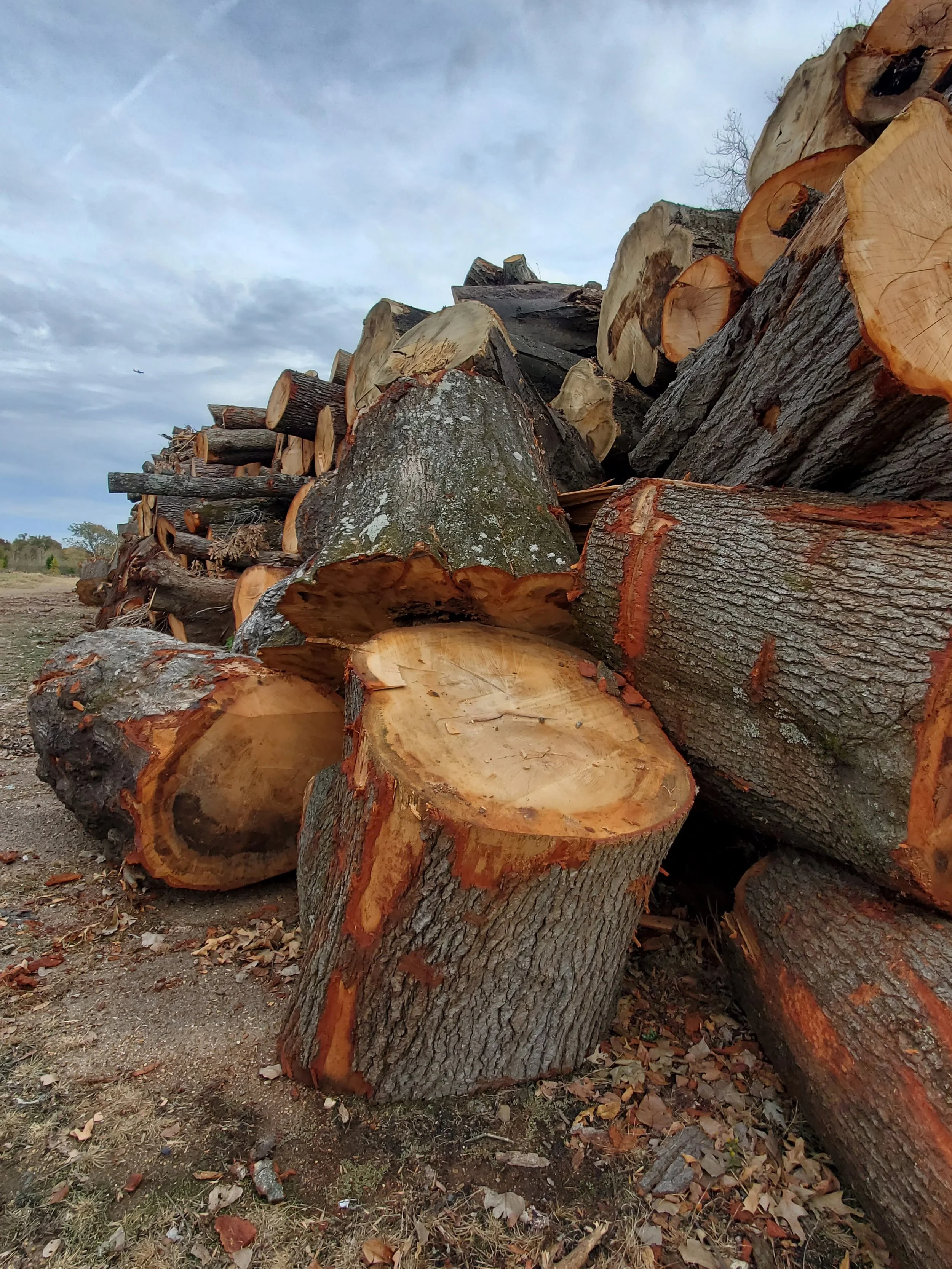
reclaiming the
future of wood.
Turning America's urban wood waste into reclaimed lumber, biochar, and verifiable carbon removal — at national scale.
A Leader in Circular Forestry.
Wood waste is rising, disposal costs are increasing, and demand for verified reclaimed materials is growing.
Our mission is to build the nation’s leading carbon-negative reclaimed wood platform. We develop, own, and operate a network of wood conversion and finishing sites that turn urban, suburban, and storm-downed timber into premium reclaimed lumber, compost, biochar, carbon removal credits, and tipping-fee revenue.
the opportunity at a glance
46M Tons
of urban wood waste
diversion each year
300+
jobs created by year 3
$57M
projected Revenue FY2031
1.2M tons
CO₂ Diverted Annually
More than a processing facility — a trusted partner for your wood waste and reclaimed materials strategy.

The Problem
46 million trees removed from U.S. cities annually — nearly all landfilled or chipped. No scalable platform exists to capture the value. Business models built on a single product or single revenue source cannot achieve scale.

The Solution
A two-tier distributed platform converting waste wood into five revenue streams: reclaimed lumber, biochar, compost, carbon credits, and tipping fees. First-mover in a supply-constrained, high-growth market with contracted supply and demand.
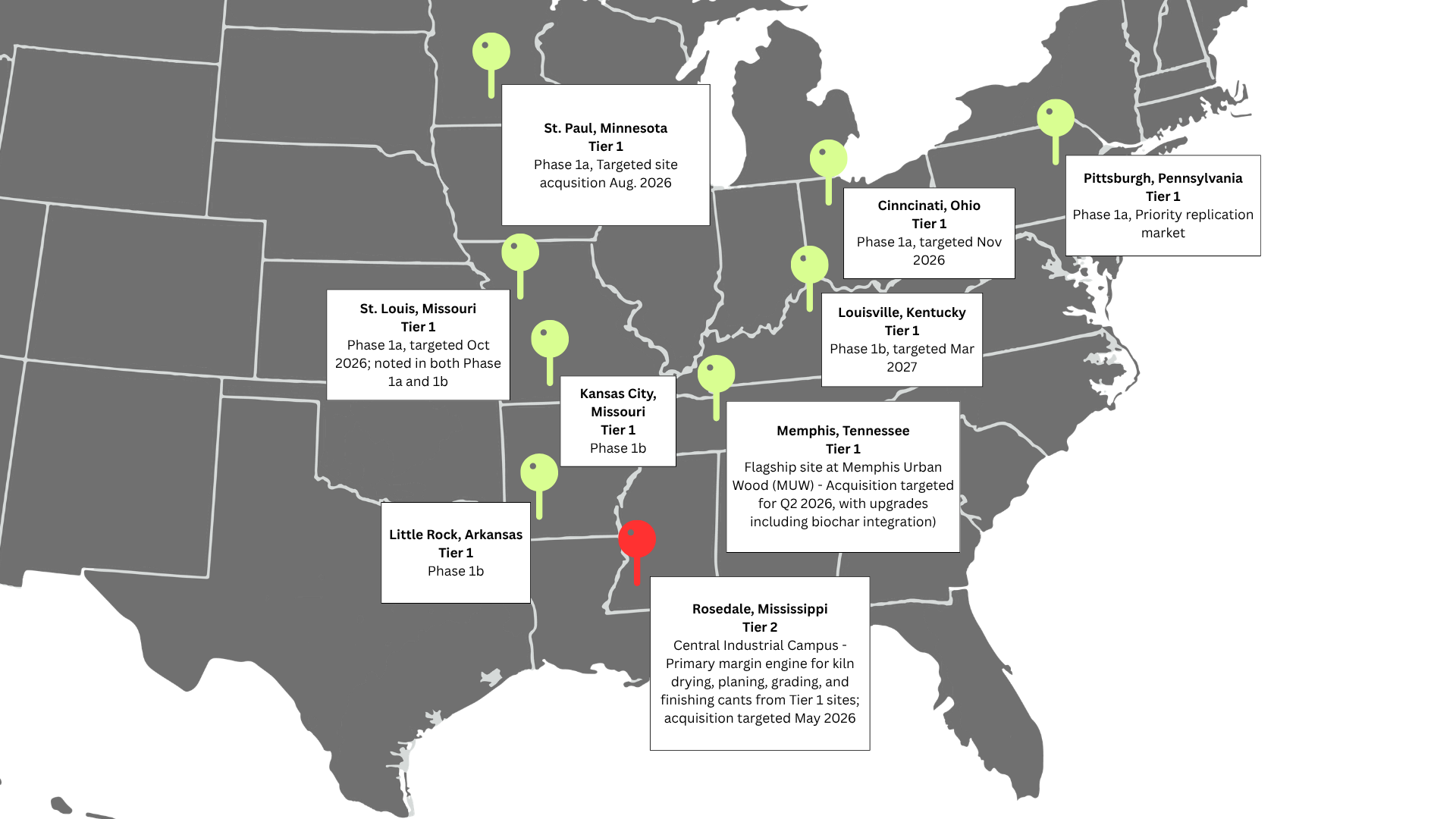
Memphis is the first site to be acquired followed by 3 additional Tier 1 processing sites and one central Tier 2 aggregation mill in the Mississippi basin (Phase 1a).

The Investment
Crossroads is seeking catalytic funding that will serve as the first phase of a total Phase 1a capital program:
Acquire the Memphis operating site
Launch the business operations
Develop the additional sites
Crossroads is currently engaging with financing providers for USDA SBA loans, USDA Grants, PRI funding and a forward purchase of carbon credits.
a massive, underserved market.
Wood-waste volumes are rising nationwide due to urban tree removals, storm events, and development activity — while disposal costs climb and landfill capacity shrinks. Policy and buyer preferences are shifting decisively toward diversion, reuse, and traceability.
Feedstock Abundance
Urban tree removals represent ~46M tons of merchantable wood annually — ~7.2B board feet of lumber potential, mostly chipped or landfilled today. Storm-driven surge volumes are accelerating: NOAA data shows $23B weather events/year (2020–2024) vs. 9/year historically.
Disposal Pressure
National avg. tipping fee: $56.80/ton (2023). EPA reports 12.2M tons of wood landfilled annually in MSW alone. Municipalities facing regulatory pressure to divert — creating a willing supply partner base for Crossroads.
Demand Acceleration
Global reclaimed lumber market projected at $78.16B by 2030. LEED v4.1 values reclaimed materials at 200% of cost for MR credits. Biochar CORCs: $164/tonne average in 2025, up 18% YoY. VCM expected to reach $50B+ by 2030.
Byproduct Market Tailwinds
U.S. biochar market projected at $1.4B by 2030 (CAGR ~13%). Compost demand rising with state organics bans and regenerative ag adoption. Over 89% of top-tier 2025 industrial biochar supply already contracted — supply is the constraint, not demand.
Five Complementary Revenue Streams
reclaimed lumber
Sold to premium furniture makers and CLT market under forward offtake contracts. Secured buyers: Cambium and AT Lumber. $78.16B global market by 2030.
compost
Sold locally to large nurseries, landscapers, and municipalities. Strong seasonal spring demand; every operation sells out. Incremental margin with zero incremental feedstock cost.
tipping fees
Arborists pay Crossroads to accept tree waste, avoiding landfill fees of $56.80/ton average. This negative-cost feedstock embeds structural margin into every downstream product.
biochar
NA market: $360M (2024) → $736M by 2033. Applications include soil amendments, PFAS remediation, water filtration, and biochar-enhanced compost blends.
carbon credits
ICVCM-approved biochar CORCs under Verra VM0044 / Puro.earth. ~3M tonnes contracted industry-wide Q1 2022–Q2 2025. 5,250 CORCs/yr per site at steady state. With potential total of up to 19,000 CORCs/yr for Phase 1a and up to 57,000 CORCs/yr for Phase 1 total, replicable for each regional expansion.
our
locations
Our Team
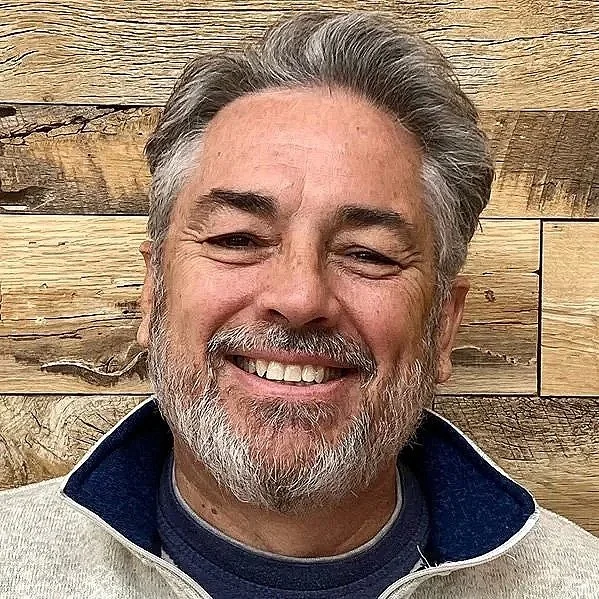
jeff carroll
Jeff builds scalable infrastructure where others see waste. With a background in construction and business, he has consistently turned overlooked material streams into revenue-generating supply chains. In Baltimore, he founded and scaled a deconstruction and material reuse enterprise to $5M in annual revenue, generating 200+ hires and reclaiming 1M board feet of lumber and 1.5M bricks from 650 row houses. That success demonstrated a repeatable model that led him to create and lead Urban Wood Economy, Inc. As CEO, he develops wood upcycling campuses that aggregate tree debris and processes them into high-value products such as lumber, biochar, and compost. Each campus is designed to divert thousands of tons of wood from landfills, capture material and impactful of carbon, and create hundreds of durable jobs while generating recurring revenue from a predictable feedstock stream. Jeff earned his MBA from Johns Hopkins Carey Business School, Master of Divinity from Capital Seminary, BA in Education from Trinity College.
Founder and CEO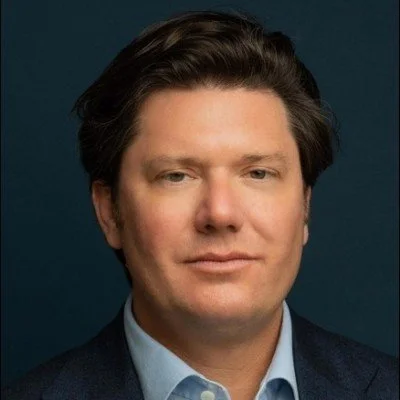
Aaron Bielenberg
Aaron brings over 20 years of elite infrastructure investment and advisory expertise to the team. Aaron has a proven track record of driving value across massive, complex portfolios. His career is defined by leadership roles at McKinsey & Company (Partner) and BCG (Managing Director), as well as his tenure as Head of Portfolio Management at Generate Capital, where he oversaw performance for a $7B sustainable infrastructure portfolio. Beyond private equity, Aaron is a recognized specialist in sovereign debt and large-scale revitalization. He has advised organizations such as the UN, World Bank, and EBRD, and was notably appointed as Revitalization Coordinator for Puerto Rico to lead critical infrastructure programs. Aaron holds a JD from Columbia Law School, a BA from Brown University, and is a former Fulbright Scholar.
Founder
Eric Letsinger
FounderEric is the founder and CEO of Quantified Ventures Holdings which designs, capitalizes, launches, and scales high-impact ventures including Quantified Ventures LLC, QV Health, Bosland Growth, Dorvie, Soil and Water Outcomes Fund, ReHealth Collaborative, and Crossroads Forest Company. Each venture delivers and reports on measurable health, social, and environmental impact. Eric was the Founder and CEO of Quantified Ventures LLC from 2014-23 and now serves as the CEO of Quantified Ventures Holdings. Eric is a tri-sector executive, bringing 30+ years of leadership experience in government, nonprofit, and private sector organizations operating in healthcare, environment, education, and housing. He has led transformative, public-private initiatives to drive impact in complex, cross-sector business environments including IBM, Baltimore Public Schools, Baltimore Housing Department, Cyveillance Software, PWC, and Samaritan Inns Homeless Services. He is currently an Adjunct Professor at both Northwestern Kellogg’s School of Management and Georgetown McDonough’s School of Business where he teaches “Impact Investing and Sustainable Finance” to MBA students.
Let’s Work Together